Commentary: Do schools still need paper textbooks in a digital age?
SINGAPORE: There are few things I dear more than flipping through the newspapers in the morn over a hot cup of coffee. Merely even for a person who grew upwards loving books, when I now want to learn about or cheque something, I am more likely to look it upwards on the Internet.
As a instructor in school, I noticed this tendency to admission information online is even more prominent among our current generation of school children. They are what Marc Prensky calls the "Digital Natives", whose lives are so entwined with information technology and digital media that tools like Google and Instagram have become verbs.
Much of their twenty-four hours outside of school circumduct effectually digital platforms: They connect with friends on Snapchat, they download music from Spotify, and they shop online. One wonders then if printed textbooks are uniform with the habits of these learners. Is in that location potential for our students to larn through digital textbooks?
Ascension OF DIGITAL TEXTBOOKS
To be articulate, digital textbooks have to exist more than the electronic soft copies of printed textbooks. The latter simply lighten schoolbags or save trees from being chopped down simply to become mountains of photocopied supplementary notes.
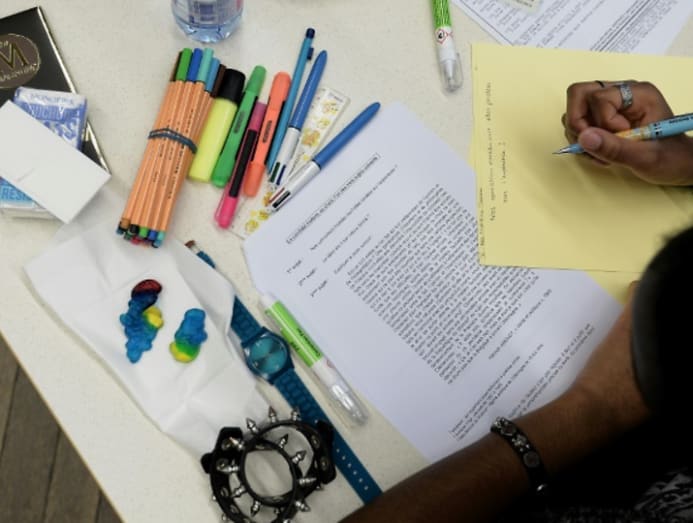
Instead, digital textbooks offer an immersive feel not possible in paper textbooks in three ways that can transform learning and potentially redefine the schoolhouse experience.
First, digital textbooks present information in rich formats, such as illustrative videos, animations or 360-degrees visual images. Imagine the excitement in examining things not visible to the naked centre, being transported into space or watching an enactment of Shakespeare'due south play.
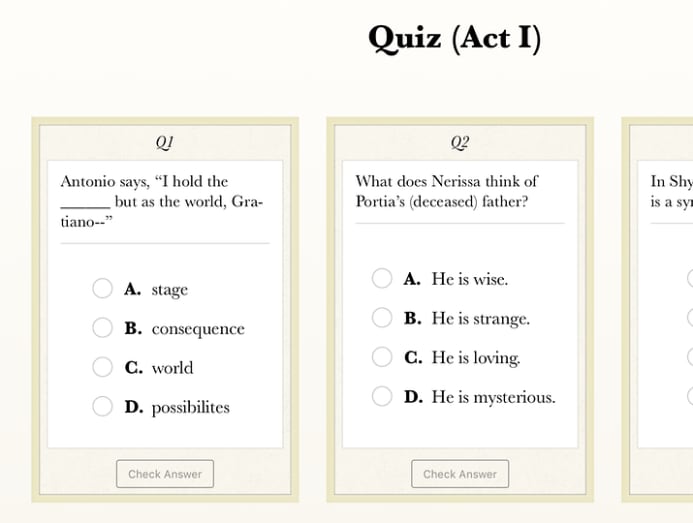
2d, they provide interactive formats. Something as basic as hyperlinks embedded into text can allow students to delve deeper into a subject, providing them a personalised learning trajectory. Feedback tools similar interactive quizzes also help them bank check their understanding, giving them timely feedback that research tells us is important to learning.
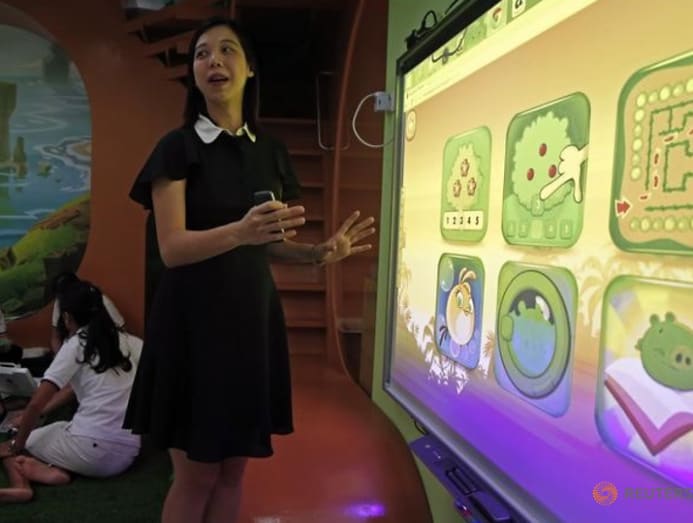
3rd, they provide connections with online communities. Unlike newspaper textbooks where the learner passively consumes information, a digital textbook parked in a device with an Cyberspace connection, like an iPad or laptop, tin can transform students into producers of knowledge.
Students can learn and share knowledge collaboratively through the use of Google documents, discussion forums or instant messaging conversation groups. Students tin can likewise express their understanding of the subject in many ways such as through creating photographs, listen-maps, audio or video recordings.
THE Case FOR DIGITAL TEXTBOOKS
With such a wide array of new features, digital textbooks have the potential to transform learning in the classroom, if we as educators and parents tin larn to harness their potential.
I still remember one educatee maxim: "I don't accept to feel stupid again", when she realised she could understand an unfamiliar word she came across in a digital textbook by hovering her finger over the word to activate the lexicon.
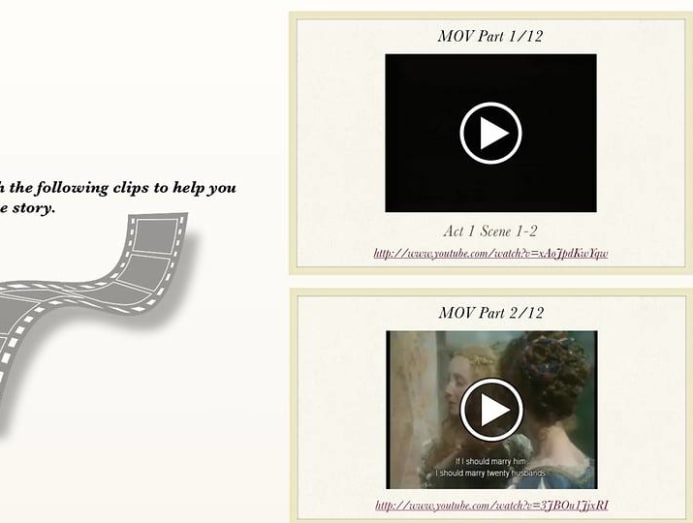
Resources like these and other hyperlinks offer immediate help to students and aid scaffold learning for those who need it. Tools like these are levelling the playing field and giving students who need help that extra heave.
Best of all, the multi-media platform adapts to our students' varied learning styles, specially for those who may not blot the best from text. Those with special needs, who have reading difficulties for instance, will have their learning strongly supported by features similar text-to-speech, enabling schools to be inclusive, vibrant centres of learning for all.
While education has been generally 1-directional, with knowledge passed on from the teacher to educatee, the advent of digital textbooks means that learning will be increasingly self-directed.
Students can receive timely and accurate feedback on their ain progress. Through bite-sized, self-accessed quizzes embedded in digital textbooks, they tin can bank check their understanding in a safe environment, to discover and build on their areas of mastery and focus on subjects for improvement.
Digital textbooks will also ensure that the information contained within is relevant to students and kept electric current, through the utilise of updated real-life examples to assist students draw links between what they are learning with the world outside their school walls. These tin can be far more than engaging and resonant than paper textbooks, with noesis and practical applications gleaned amend remembered.
CHALLENGES TO ADOPTING DIGITAL TEXTBOOKS
If digital textbooks have such a strong reward, then it begs the question why paper textbooks are even so the norm. Some say the cost of every pupil owning a tablet is meaning, especially for low-income families.
Perhaps, every bit with all new technologies, some remember it is far ameliorate to accept the bourgeois arroyo: Let the concept of digital textbooks mature and kinks like the price of royalties and subscriptions to educational modules iron themselves out first.
Indeed, for teaching and academia, a field built on books for thousands of years, it can be daunting to push for digital textbooks. Except for the younger ones, near teachers were raised on ink and paper.
For educators, it will be challenging to figure out how to go about teaching students if students can get all the learning they need from a digital textbook. But precisely considering data is becoming so freely available, educators will besides have to identify, curate and ringfence the content and knowledge students are taught.
On a practical level, teachers will have to grapple with how to structure classroom learning and learning outside of school. Our education arrangement will as well have to learn how to employ technology to put together relevant learning materials that students can access on their digital textbook.
EXPLORE FURTHER, TAKE ACTION FOR DIGITAL NATIVES
It would be a pity if sheer sentimentality or concern for the bottom line prevents a more than pervasive adoption of digital textbooks.
Certainly, digital textbooks are not a panacea for better learning, because whether we can unleash the potential transformative powers of digital textbooks volition depend on the deportment we have.
Enquiry, including mine, has shown that ultimately, students need practiced teachers who can capitalise on multi-media resources, interactive features and self-assessment tools that digital textbooks offering to aid them become more than cocky-directed learners.
The skilful news is that apps for putting together such digital textbooks are becoming increasingly widespread and user friendly, such that fifty-fifty a novice like myself can put together a few modules to support teaching.
Some professional evolution will be in order, but I am confident that educators who aspire to bring about positive learning outcomes will be open to exploring farther and ultimately have activity that are in the all-time interests of our Digital Native learners.
Dr Tay Hui Yong teaches at the National Plant of Teaching'southward curriculum, teaching and learning academic group. Her research has focused on cocky-regulated learning, authentic assessment and other ways to ameliorate the learning experience for students.
Source: https://cnalifestyle.channelnewsasia.com/singapore/commentary-do-schools-still-need-paper-textbooks-digital-age-211111
0 Response to "Commentary: Do schools still need paper textbooks in a digital age?"
Post a Comment